
Description
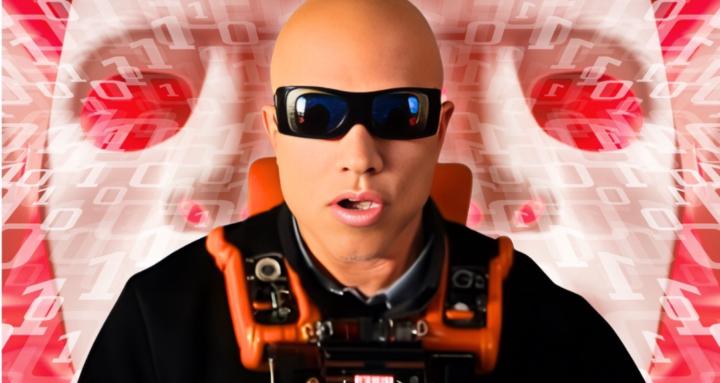
Elmer Locker Jr – This World is a Simulation
The concept that reality may not be what it seems has fascinated philosophers, scientists, and spiritual thinkers for centuries. In recent years, simulation theory has become one of the most talked-about subjects in modern intellectual discussion. Elmer Locker Jr – This World is a Simulation dives deep into this extraordinary possibility, exploring whether humanity is living inside a carefully designed artificial reality rather than an objective universe.
This thought-provoking work challenges traditional ideas about existence, consciousness, free will, spirituality, and technology. Instead of accepting reality at face value, readers are encouraged to question the very foundation of human experience. The book examines patterns in the universe, strange coincidences, advanced technology, and philosophical paradoxes that suggest the world may operate similarly to a highly advanced computer simulation.
From ancient civilizations to modern quantum physics, the theory that life is programmed has gained momentum across multiple fields of study. The growing power of artificial intelligence, virtual reality, and computational systems has made the idea more believable than ever before. Through compelling arguments and engaging explanations, this work pushes readers to consider whether human beings are participants in a much larger digital construct.
Understanding the Simulation Theory
Simulation theory proposes that reality is artificially created, much like a computer-generated environment. According to this idea, advanced beings or civilizations may have developed technology capable of simulating entire universes complete with conscious inhabitants.
In Elmer Locker Jr – This World is a Simulation, the theory is explored through both scientific and philosophical lenses. The book examines whether mathematical precision found throughout nature could indicate underlying programming structures. Everything from planetary motion to DNA sequencing follows patterns that resemble coded systems.
Many theorists argue that if humanity eventually creates simulations indistinguishable from reality, then statistically it becomes likely that humans themselves already exist inside one. This argument has sparked debates among scientists, philosophers, and futurists worldwide.
The book presents these ideas in a way that remains accessible while still intellectually stimulating. Readers are guided through complex theories without overwhelming technical jargon, making the subject approachable for both beginners and advanced thinkers.
The Connection Between Technology and Reality
Modern technological advancements have dramatically changed how people perceive reality. Artificial intelligence, virtual worlds, augmented reality, and neural networks continue to blur the boundaries between physical existence and digital experience.
One of the most fascinating aspects of Elmer Locker Jr – This World is a Simulation is its exploration of how rapidly evolving technology mirrors concepts found within simulation theory. Video games now contain vast open worlds populated by intelligent systems and lifelike characters. Virtual environments continue becoming more immersive every year.
As computing power grows exponentially, the possibility of creating fully simulated realities no longer seems impossible. The book asks an important question: if humans can eventually build conscious simulations, what prevents a higher intelligence from already doing the same?
This idea fundamentally changes how people think about life, purpose, and existence itself.
Quantum Physics and the Nature of Reality
Quantum physics has introduced discoveries that challenge traditional understandings of the universe. Particles behave unpredictably, observation appears to influence outcomes, and reality itself becomes uncertain at microscopic levels.
Many supporters of simulation theory point to these phenomena as potential evidence of computational behavior within the universe. In Elmer Locker Jr – This World is a Simulation, quantum mechanics is discussed as one of the strongest scientific foundations supporting the simulation hypothesis.
The book explores ideas such as:
- Reality rendering only when observed
- The probabilistic behavior of particles
- Mathematical structures governing physical laws
- Information-based interpretations of the universe
- The possibility of coded dimensions
These concepts create a fascinating bridge between science and philosophy. Readers are encouraged to reconsider whether physical reality is truly solid or simply processed information interpreted by consciousness.
Consciousness and Human Perception
One of the central themes explored throughout the book is consciousness. If reality is simulated, then human awareness becomes one of the greatest mysteries in existence.
What exactly is consciousness? Why do humans possess self-awareness? Could consciousness itself be part of the simulation architecture?
Elmer Locker Jr – This World is a Simulation investigates whether human perception acts similarly to a user interface. Instead of directly experiencing objective reality, individuals may only interpret selected information processed through biological systems.
This perspective aligns with theories suggesting that the human brain filters vast amounts of data to create manageable experiences. Reality, according to this viewpoint, could function like a programmed environment optimized for conscious interaction.
The book also explores spiritual implications connected to consciousness, suggesting that awareness may extend beyond physical limitations.
Ancient Philosophies and Simulation Concepts
Although simulation theory feels modern, many ancient traditions contained remarkably similar ideas. Philosophers and spiritual teachers throughout history questioned whether the material world represented ultimate reality.
Plato’s Allegory of the Cave described humanity perceiving only shadows of truth rather than truth itself. Eastern philosophies often referred to reality as illusion or dream-like existence. Mystical traditions across cultures emphasized awakening from false perceptions.
In Elmer Locker Jr – This World is a Simulation, these historical connections are explored in depth. The book demonstrates how ancient wisdom and modern technological theories unexpectedly intersect.
This blend of philosophy, spirituality, and science creates a compelling narrative that appeals to readers searching for deeper meaning beyond material existence.
Free Will Inside a Simulated Universe
If reality is programmed, do humans truly possess free will?
This question forms one of the most intellectually challenging aspects of simulation theory. The book examines whether choices are genuinely independent or influenced by pre-designed systems and algorithms.
Some theorists argue that simulations may contain adaptive intelligence allowing unpredictable behavior. Others believe every event could already be predetermined within the structure of the simulation.
Elmer Locker Jr – This World is a Simulation presents multiple viewpoints without forcing a single conclusion. Readers are encouraged to critically analyze their own beliefs regarding destiny, consciousness, and personal freedom.
This balanced approach makes the material engaging and thought-provoking rather than dogmatic.
The Role of Artificial Intelligence
Artificial intelligence plays a major role in discussions surrounding simulated realities. As AI systems become increasingly advanced, questions emerge about consciousness, creativity, and digital intelligence.
The book explores whether artificial intelligence may eventually develop awareness comparable to human consciousness. If that becomes possible, it raises profound ethical and philosophical questions.
Could humanity itself represent advanced artificial intelligence created by another civilization?
This possibility pushes readers to reconsider the relationship between creator and creation. The line separating organic life from artificial systems becomes increasingly blurred as technology evolves.
Philosophical Implications of a Simulated Reality
The implications of simulation theory extend far beyond science. They influence morality, religion, psychology, and the meaning of existence itself.
If reality is simulated:
- What is the purpose of human life?
- Who created the simulation?
- Can the simulation be altered or escaped?
- Does death represent an ending or transition?
- Are spiritual experiences connected to higher dimensions?
Elmer Locker Jr – This World is a Simulation examines these profound questions with depth and curiosity. Rather than presenting simplistic answers, the book invites readers into an ongoing exploration of existence.
This open-ended intellectual approach keeps the material engaging while encouraging deeper reflection long after reading.
Why This Topic Fascinates Modern Audiences
Simulation theory has become increasingly popular because it combines science fiction concepts with real scientific inquiry. It offers an alternative framework for understanding mysteries that traditional explanations often fail to address completely.
Modern audiences are especially drawn to the topic because technological advancements make simulated realities easier to imagine. Virtual reality, AI-generated environments, and digital ecosystems continue evolving at incredible speed.
In addition, many people feel disconnected from conventional narratives about existence. Books like Elmer Locker Jr – This World is a Simulation provide fresh perspectives that challenge assumptions and inspire curiosity.
The subject resonates with readers interested in:
- Consciousness studies
- Quantum physics
- Philosophy
- Artificial intelligence
- Spiritual awakening
- Metaphysics
- Futurism
- Reality exploration
This broad appeal has contributed significantly to the growing popularity of simulation-based discussions worldwide.
Final Thoughts
Elmer Locker Jr – This World is a Simulation offers a compelling exploration of one of the most fascinating theories of modern thought. By combining science, philosophy, spirituality, and technology, the work challenges readers to reconsider everything they believe about existence.
The book does not simply attempt to prove or disprove simulation theory. Instead, it encourages critical thinking and intellectual curiosity. Readers are invited to question assumptions, explore deeper truths, and remain open to possibilities beyond conventional understanding.
Whether approached from a scientific perspective or a philosophical one, the concept of simulated reality continues inspiring debate across the world. As technology advances and human understanding expands, the line between physical and digital existence may become increasingly difficult to distinguish.
For readers fascinated by consciousness, reality, and the mysteries of existence, this work provides an engaging and thought-provoking journey into the unknown.


Reviews
There are no reviews yet.