
Description
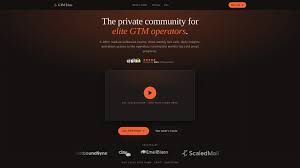
Christian Plascencia – GTM Elites
In today’s competitive business landscape, companies are constantly searching for effective ways to accelerate growth, improve customer acquisition, and build scalable revenue systems. This is where Christian Plascencia – GTM Elites has gained significant attention among entrepreneurs, founders, marketers, sales professionals, and business operators who want to develop world-class go-to-market strategies.
A successful go-to-market framework is no longer optional. Businesses need clear positioning, effective sales processes, strong customer acquisition channels, and data-driven decision-making to stay ahead of the competition. Through proven methodologies and practical execution systems, professionals can learn how to create sustainable growth engines that drive predictable revenue.
This comprehensive guide explores the principles, strategies, benefits, and opportunities associated with modern go-to-market execution and why many business professionals are interested in advanced GTM frameworks.
Understanding Modern Go-To-Market Strategies
A go-to-market strategy serves as the foundation for launching products, entering new markets, and scaling business operations. It combines sales, marketing, customer success, product positioning, and revenue operations into a unified growth system.
Modern businesses face several challenges:
- Increasing customer acquisition costs
- Market saturation
- Longer sales cycles
- Competitive pressure
- Changing consumer behavior
- Rapid technological advancements
To overcome these challenges, organizations need structured frameworks that allow them to attract, convert, and retain customers efficiently.
Effective GTM systems focus on:
- Audience targeting
- Product positioning
- Messaging development
- Sales process optimization
- Revenue forecasting
- Customer retention
- Performance analytics
These elements work together to create a scalable growth machine capable of generating long-term business success.
Why Go-To-Market Excellence Matters
Many businesses fail not because they have poor products but because they lack a clear market strategy. Even exceptional solutions can struggle when companies do not understand their customers or fail to communicate value effectively.
A strong GTM framework helps organizations:
Increase Revenue Predictability
Businesses can forecast growth more accurately when they have standardized customer acquisition processes and measurable performance indicators.
Improve Customer Acquisition
Understanding customer needs enables companies to develop targeted campaigns that generate higher conversion rates.
Strengthen Competitive Positioning
Effective positioning allows businesses to differentiate themselves from competitors and establish authority within their industries.
Scale Efficiently
Companies with repeatable growth systems can expand without experiencing operational bottlenecks.
Enhance Team Alignment
Sales, marketing, and operations teams perform better when they work toward shared goals using consistent processes.
Key Components of a Successful GTM System
Market Research and Analysis
Every successful growth strategy begins with understanding the market.
This includes:
- Industry analysis
- Competitive research
- Customer interviews
- Market segmentation
- Opportunity assessment
Organizations that invest in deep research often discover hidden opportunities that competitors overlook.
Customer Persona Development
Successful businesses know exactly who they serve.
Detailed customer personas help teams understand:
- Pain points
- Buying motivations
- Decision-making processes
- Budget considerations
- Industry challenges
The more accurately a company understands its customers, the more effective its marketing and sales efforts become.
Product Positioning
Positioning determines how customers perceive a product or service.
Strong positioning answers critical questions:
- What problem does the solution solve?
- Why is it different?
- Why should customers trust it?
- What outcomes can customers expect?
Clear positioning creates stronger messaging and improves conversion rates throughout the sales funnel.
Building High-Converting Sales Systems
Sales execution remains one of the most important aspects of any growth strategy.
High-performing sales organizations focus on:
Lead Qualification
Not every lead is a good fit.
Qualification frameworks help sales teams prioritize opportunities that are most likely to convert into paying customers.
Sales Process Design
A structured sales process improves consistency and forecasting accuracy.
Typical stages include:
- Prospecting
- Discovery
- Qualification
- Presentation
- Objection Handling
- Proposal
- Closing
- Onboarding
Each stage should have defined goals and measurable outcomes.
Pipeline Management
Sales leaders rely on pipeline visibility to monitor performance and identify bottlenecks before they affect revenue targets.
Consistent pipeline reviews help teams maintain momentum and improve win rates.
The Role of Marketing in GTM Success
Marketing serves as the engine that generates awareness and demand.
Modern GTM strategies often include:
Content Marketing
High-quality content helps businesses:
- Build authority
- Improve search visibility
- Educate prospects
- Generate leads
- Support sales conversations
Paid Advertising
Strategic advertising campaigns can accelerate customer acquisition when properly targeted and optimized.
Social Media Marketing
Businesses use social platforms to:
- Build brand awareness
- Engage audiences
- Generate leads
- Establish thought leadership
Email Marketing
Email remains one of the highest ROI marketing channels available today.
Well-designed campaigns nurture leads and guide prospects through the buyer journey.
Revenue Operations and Business Scaling
Revenue operations (RevOps) has become a critical component of modern growth strategies.
RevOps aligns:
- Sales
- Marketing
- Customer Success
- Operations
The goal is to eliminate silos and create a unified revenue-generating system.
Benefits include:
- Better forecasting
- Improved efficiency
- Enhanced customer experiences
- Greater visibility into performance
- Faster decision-making
Organizations that implement RevOps principles often experience stronger growth and improved operational effectiveness.
Data-Driven Decision Making
Successful companies rely on data rather than assumptions.
Important GTM metrics include:
Customer Acquisition Cost (CAC)
Measures how much it costs to acquire a new customer.
Lifetime Value (LTV)
Estimates the total revenue generated by a customer throughout their relationship with the business.
Conversion Rates
Tracks how effectively prospects move through the sales funnel.
Revenue Growth
Measures overall business expansion over time.
Churn Rate
Evaluates customer retention and satisfaction.
By monitoring these metrics, companies can optimize performance and maximize profitability.
Common Challenges Businesses Face
Despite having strong products, many organizations struggle with execution.
Common obstacles include:
Poor Market Positioning
Unclear messaging can confuse potential customers and reduce conversions.
Inefficient Sales Processes
Lack of structure often results in missed opportunities and inconsistent performance.
Weak Lead Generation
Without reliable lead sources, businesses may struggle to maintain pipeline health.
Misaligned Teams
Sales and marketing teams often operate independently, leading to communication gaps and wasted resources.
Limited Data Visibility
Without accurate reporting, decision-makers cannot identify growth opportunities effectively.
Addressing these challenges requires systematic planning and continuous optimization.
Skills Developed Through Advanced GTM Training
Professionals seeking growth opportunities often focus on developing skills such as:
Strategic Thinking
Learning how to evaluate markets, opportunities, and competitive landscapes.
Revenue Planning
Building predictable systems for sustainable business growth.
Sales Leadership
Managing teams, forecasting revenue, and improving sales performance.
Customer Acquisition
Creating repeatable methods for generating and converting leads.
Market Expansion
Developing strategies for entering new industries, regions, or customer segments.
Operational Excellence
Designing processes that improve efficiency and scalability.
These capabilities are increasingly valuable in today’s rapidly evolving business environment.
Who Can Benefit Most?
Go-to-market education is valuable for a wide range of professionals.
Entrepreneurs
Founders can learn how to launch and scale businesses more effectively.
Startup Teams
Early-stage companies benefit from structured growth frameworks and execution systems.
Sales Professionals
Sales representatives can improve prospecting, qualification, and closing performance.
Marketing Specialists
Marketers gain insights into demand generation and customer acquisition strategies.
Revenue Leaders
Executives can build scalable systems that support long-term growth objectives.
Consultants
Advisors can use GTM frameworks to help clients improve business performance.
The Future of Go-To-Market Strategies
Technology continues to transform how companies engage with customers.
Emerging trends include:
- Artificial intelligence
- Revenue automation
- Predictive analytics
- Personalized customer journeys
- Advanced CRM systems
- Multi-channel engagement
- Data-driven forecasting
Organizations that adapt to these trends will likely gain significant competitive advantages in the coming years.
Businesses increasingly recognize that sustainable growth depends on building integrated systems rather than relying on isolated tactics.
Final Thoughts
Christian Plascencia – GTM Elites represents the growing demand for structured go-to-market expertise in modern business environments. As organizations compete for market share and revenue growth, the importance of effective GTM execution continues to increase.
Success today requires more than just a great product. Companies need strategic positioning, efficient sales systems, scalable marketing processes, revenue operations alignment, and data-driven decision-making. Businesses that master these areas are better equipped to generate predictable revenue and achieve sustainable long-term growth.
Whether you are an entrepreneur launching a startup, a sales professional looking to improve performance, or a business leader focused on scaling operations, understanding advanced go-to-market principles can provide a significant competitive advantage. By implementing proven frameworks and continuously optimizing execution, organizations can unlock new growth opportunities and build lasting success in increasingly competitive markets.





Reviews
There are no reviews yet.