
Description
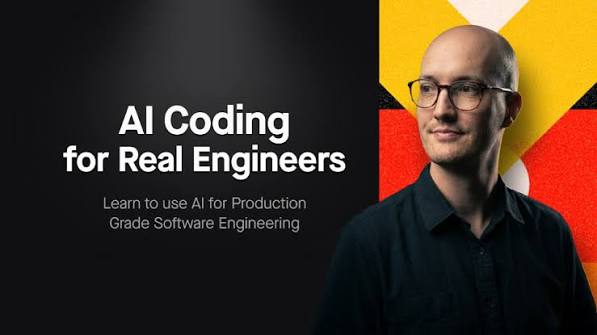
Matt Pocock – AI Coding for Real Engineers
Introduction
Artificial intelligence is transforming the way software is built, tested, deployed, and maintained. Developers across the world are discovering new methods to accelerate their workflows while maintaining high standards of quality and reliability. One of the most practical resources helping engineers understand this transformation is Matt Pocock – AI Coding for Real Engineers.
Unlike generic AI tutorials that focus on theoretical concepts, this learning experience is designed specifically for software engineers who want to integrate AI into real-world development environments. It bridges the gap between traditional programming practices and modern AI-powered workflows, showing developers how to leverage intelligent tools without compromising engineering principles.
As AI becomes an essential component of the software development lifecycle, engineers must learn how to collaborate effectively with these systems. Understanding when to trust AI-generated code, how to review suggestions critically, and how to maintain software quality are skills that define the next generation of successful developers.
The Evolution of AI in Software Development
The software industry has experienced several major technological shifts over the past few decades. From procedural programming to object-oriented design, cloud computing, DevOps, and now artificial intelligence, every advancement has changed the way engineers work.
AI-assisted development represents the latest evolution in this journey. Modern AI systems can:
- Generate code snippets
- Explain complex algorithms
- Refactor existing codebases
- Create documentation
- Assist with debugging
- Suggest architectural improvements
- Improve developer productivity
However, these capabilities only become valuable when applied correctly. Engineers still need strong problem-solving skills, domain knowledge, and the ability to evaluate generated outputs critically.
This is where Matt Pocock’s approach stands out. Rather than positioning AI as a replacement for developers, it demonstrates how intelligent tools can become powerful collaborators within established engineering workflows.
Why Real Engineers Need AI Skills
Software engineering is no longer limited to writing code manually from scratch. Today’s engineers are expected to deliver features faster, maintain large codebases, and adapt quickly to changing requirements.
AI-powered development tools help address these challenges by reducing repetitive work and enabling developers to focus on higher-value tasks.
Key benefits include:
Faster Development Cycles
Developers can generate boilerplate code, create test cases, and build initial implementations more quickly. This reduces development time and accelerates project delivery.
Improved Learning
Engineers can use AI systems to understand unfamiliar technologies, frameworks, and programming languages. Instead of spending hours searching through documentation, they can receive contextual explanations instantly.
Enhanced Problem Solving
Complex bugs and architectural challenges often require multiple perspectives. AI can provide alternative solutions that developers may not have considered.
Better Documentation
Maintaining accurate documentation is often neglected due to time constraints. AI tools help generate clear and structured technical documentation efficiently.
Increased Productivity
By automating repetitive tasks, engineers can dedicate more attention to architecture, optimization, user experience, and business requirements.
Practical AI Workflows for Modern Developers
One of the most important lessons taught through Matt Pocock’s methodology is that successful AI adoption depends on workflow integration rather than simple tool usage.
Developers who achieve the best results follow structured processes.
Requirement Analysis
Before generating code, engineers define clear requirements and objectives. AI performs significantly better when prompts contain precise instructions and context.
Incremental Development
Rather than generating entire applications at once, experienced developers break projects into manageable components. This allows better control over quality and maintainability.
Code Review
Every AI-generated output should undergo careful review. Engineers must verify:
- Correctness
- Security
- Performance
- Scalability
- Maintainability
Testing
Generated code should be validated through automated and manual testing procedures to ensure reliability.
Continuous Improvement
AI outputs can be refined iteratively through additional prompts and feedback, resulting in increasingly accurate solutions.
Understanding AI-Assisted Coding
AI-assisted coding is not simply about asking a chatbot to write software. Effective usage requires understanding both the strengths and limitations of modern AI systems.
Strengths
AI excels at:
- Pattern recognition
- Code generation
- Syntax assistance
- Documentation creation
- Refactoring suggestions
- Knowledge retrieval
Limitations
AI may struggle with:
- Business-specific requirements
- Deep contextual understanding
- Complex architectural decisions
- Novel problem domains
- Long-term project consistency
Successful engineers learn to combine AI capabilities with human expertise rather than relying entirely on automated outputs.
The Importance of Critical Thinking
One of the most valuable engineering skills remains critical thinking. AI can provide answers quickly, but speed should never replace judgment.
Developers should always ask:
- Is this solution correct?
- Does it meet business requirements?
- Is it secure?
- Can it scale?
- Will future developers understand it?
Engineering excellence depends on thoughtful evaluation rather than blind acceptance of generated code.
The strongest professionals use AI as an assistant while maintaining full ownership of technical decisions.
Building Production-Ready Software with AI
Many developers can generate code quickly, but production-ready software requires much more than functionality.
Professional engineering practices include:
Security Considerations
AI-generated code must be reviewed for:
- Input validation
- Authentication vulnerabilities
- Authorization issues
- Data exposure risks
- Dependency security
Performance Optimization
Developers should evaluate:
- Computational efficiency
- Database interactions
- Network requests
- Resource utilization
- Scalability factors
Maintainability
Clean software architecture remains essential. Code should be:
- Readable
- Modular
- Testable
- Extensible
- Well documented
Reliability
Applications must perform consistently under real-world conditions. Proper testing and monitoring remain critical regardless of how code was generated.
AI and TypeScript Development
Matt Pocock is widely recognized for expertise in TypeScript education and advanced developer tooling. This background provides valuable insights into how AI can support strongly typed development environments.
TypeScript offers:
- Better maintainability
- Improved developer experience
- Enhanced code reliability
- Strong tooling support
- Reduced runtime errors
When combined with AI-assisted workflows, developers can achieve significant productivity gains while preserving code quality standards.
The combination of intelligent tooling and robust type systems represents a powerful approach for modern software engineering teams.
Common Mistakes Developers Make
Many engineers adopt AI tools enthusiastically but fail to achieve meaningful productivity improvements because of avoidable mistakes.
Overreliance on Generated Code
Accepting outputs without review can introduce bugs, security vulnerabilities, and architectural problems.
Poor Prompt Design
Vague instructions produce inconsistent results. Clear requirements lead to better outputs.
Ignoring Testing
Generated code should always be validated through comprehensive testing procedures.
Lack of Context
Providing insufficient project information reduces output quality and relevance.
Treating AI as an Expert
AI can assist with development, but ultimate responsibility remains with the engineer.
Avoiding these pitfalls allows developers to maximize benefits while minimizing risks.
The Future of Engineering Careers
Artificial intelligence is reshaping software development roles, but it is not eliminating the need for engineers.
Instead, the profession is evolving.
Future engineers will need expertise in:
- AI-assisted development
- System design
- Software architecture
- Security engineering
- Performance optimization
- Product thinking
- Technical communication
Developers who embrace these changes will remain highly valuable in an increasingly automated industry.
The most successful professionals will be those who combine technical depth with the ability to leverage intelligent tools effectively.
Key Takeaways for Software Engineers
Engineers seeking long-term success should focus on several core principles:
- Learn AI-assisted development workflows.
- Maintain strong programming fundamentals.
- Review generated code carefully.
- Prioritize security and reliability.
- Continue improving problem-solving skills.
- Use automation strategically.
- Build maintainable systems.
- Stay adaptable as technology evolves.
These principles help developers remain productive, relevant, and effective in a rapidly changing landscape.
Conclusion
Matt Pocock – AI Coding for Real Engineers represents a practical and engineering-focused approach to modern software development. Rather than promoting artificial intelligence as a replacement for developers, it demonstrates how engineers can use advanced tools to enhance productivity, improve workflows, and deliver higher-quality software.
As AI continues to become an integral part of the development process, the ability to collaborate effectively with intelligent systems will become a defining skill for software professionals. Engineers who understand both the capabilities and limitations of AI will be best positioned to build reliable, scalable, and maintainable applications.
The future belongs to developers who combine technical expertise, critical thinking, and AI-powered productivity. By embracing these principles, engineers can navigate the evolving technology landscape with confidence and continue creating exceptional software solutions in an increasingly intelligent world.



Reviews
There are no reviews yet.