
Description
Introduction
Artificial Intelligence is no longer a futuristic concept reserved for technology giants and research laboratories. It has become a critical business tool that is transforming how companies operate, market, innovate, and scale. Organizations across industries are actively seeking professionals who understand how to leverage AI effectively, making practical AI education one of the most valuable investments in today’s digital economy.
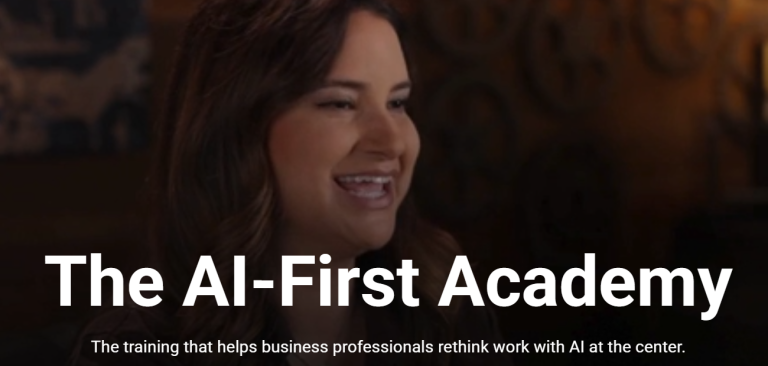
Allie K. Miller – AI First Academy is designed to bridge the gap between AI theory and real-world implementation. Rather than focusing solely on technical concepts, the program emphasizes practical business applications, strategic decision-making, productivity enhancement, workflow automation, and organizational transformation through artificial intelligence.
The academy provides a structured framework for understanding how AI can be integrated into business operations, helping entrepreneurs, executives, marketers, consultants, creators, and professionals develop AI-first thinking. Participants gain insights into the tools, strategies, and methodologies that are shaping the future of work while learning how to remain competitive in an increasingly AI-driven marketplace.
This comprehensive guide explores the core concepts, benefits, learning outcomes, curriculum structure, and long-term value offered through this educational experience.
Understanding the AI-First Mindset
One of the most significant shifts occurring in modern business is the transition from traditional workflows to AI-enhanced systems. Companies that successfully embrace artificial intelligence are often able to achieve greater efficiency, improved customer experiences, and stronger competitive advantages.
The AI-first mindset involves evaluating every process, task, and decision through the lens of automation, augmentation, and optimization. Instead of asking whether AI can be used, organizations begin asking how AI can improve outcomes across every department.
This mindset encourages professionals to:
- Identify repetitive tasks suitable for automation
- Enhance decision-making with AI-powered insights
- Improve productivity across teams
- Accelerate content creation and research
- Optimize customer support systems
- Streamline business operations
- Create scalable processes for growth
The academy focuses heavily on cultivating this perspective, ensuring students understand not only the technology but also the strategic thinking required to maximize its potential.
Why AI Skills Are Becoming Essential
The rapid advancement of artificial intelligence has fundamentally changed workforce requirements. Businesses increasingly value employees who can effectively integrate AI into their daily responsibilities.
Key reasons why AI skills are essential include:
Increased Productivity
AI tools can significantly reduce the time required for research, content creation, data analysis, and administrative work. Professionals who understand these tools can often accomplish more in less time.
Better Decision Making
Modern AI systems can process massive amounts of information quickly, helping businesses make informed decisions based on data rather than assumptions.
Competitive Advantage
Organizations that adopt AI effectively often outperform competitors through faster innovation, improved efficiency, and enhanced customer experiences.
Career Growth Opportunities
Professionals with AI expertise are becoming increasingly valuable across industries including marketing, sales, consulting, finance, healthcare, education, and technology.
Business Scalability
Entrepreneurs can leverage AI to automate processes that traditionally required additional staff, enabling faster and more cost-effective growth.
Core Learning Areas Covered
The educational framework focuses on practical applications rather than theoretical concepts alone. Participants are introduced to numerous real-world use cases that can immediately impact business performance.
AI Fundamentals
Understanding the foundations of artificial intelligence is critical for long-term success. Students learn how modern AI systems operate, their capabilities, limitations, and best practices for implementation.
Topics typically include:
- Machine learning concepts
- Generative AI systems
- Large language models
- AI ecosystems
- Emerging technology trends
- Responsible AI usage
This foundational knowledge enables participants to confidently evaluate and implement AI solutions within their organizations.
Business Strategy and AI Integration
Successful AI adoption requires strategic planning. Organizations often struggle not because of technology limitations but because of poor implementation strategies.
Participants learn how to:
- Assess organizational readiness
- Identify high-impact opportunities
- Develop AI implementation roadmaps
- Prioritize projects effectively
- Measure return on investment
- Manage organizational change
This strategic focus helps businesses avoid common mistakes while maximizing the value of AI initiatives.
Productivity Enhancement Systems
One of the fastest ways to benefit from AI is through personal productivity improvements. Modern professionals often spend countless hours on repetitive activities that can be streamlined using intelligent tools.
Examples include:
- Research acceleration
- Meeting preparation
- Content drafting
- Email management
- Documentation creation
- Data organization
- Workflow optimization
Learning these systems can dramatically improve daily efficiency and free up time for higher-value activities.
AI for Marketing and Content Creation
Marketing is among the areas experiencing the most significant AI-driven transformation.
Professionals explore how artificial intelligence can support:
Content Development
AI can assist with:
- Blog writing
- Content ideation
- Social media planning
- Copywriting
- Video scripting
- Audience research
Customer Insights
Businesses can leverage AI to better understand customer behavior, preferences, and purchasing patterns.
Campaign Optimization
Artificial intelligence helps marketers analyze performance metrics and identify opportunities for improvement.
Personalization
Modern AI systems enable highly personalized customer experiences that improve engagement and conversion rates.
Automation and Workflow Design
Automation represents one of the most practical applications of artificial intelligence.
Organizations often waste significant resources on repetitive manual processes. AI-powered automation can eliminate inefficiencies while improving accuracy and consistency.
Key automation areas include:
- Customer support workflows
- Lead qualification
- Data processing
- Report generation
- Scheduling systems
- Internal communications
- Administrative operations
Understanding how to design and implement these workflows can create substantial productivity gains across an organization.
Leadership in the Age of AI
As artificial intelligence becomes increasingly integrated into business operations, leaders must develop new competencies.
Modern leadership requires:
Technology Awareness
Leaders need a practical understanding of emerging technologies and their business implications.
Change Management
Implementing AI often involves significant organizational transformation. Effective leaders guide teams through these transitions successfully.
Innovation Culture
Creating environments that encourage experimentation and continuous improvement is essential for long-term success.
Ethical Decision Making
Responsible AI implementation requires careful consideration of privacy, transparency, and fairness.
The academy emphasizes leadership development alongside technical understanding, helping participants become effective champions of AI adoption.
Practical Applications Across Industries
Artificial intelligence is not limited to technology companies. Virtually every industry can benefit from intelligent systems and automation.
Entrepreneurship
Entrepreneurs can use AI to:
- Validate business ideas
- Conduct market research
- Create marketing assets
- Improve customer support
- Scale operations efficiently
Consulting
Consultants can enhance service delivery through:
- Faster research
- Improved analysis
- Better presentations
- Enhanced client communication
- Automated reporting
Sales
Sales professionals can benefit from:
- Lead prioritization
- Customer intelligence
- Proposal generation
- Pipeline management
- Follow-up automation
Education
Educators can leverage AI for:
- Lesson planning
- Personalized learning
- Content creation
- Assessment support
- Administrative efficiency
Finance
Financial professionals can improve:
- Data analysis
- Forecasting
- Reporting
- Risk assessment
- Decision support systems
Building an AI-Driven Organization
Many organizations implement AI tools without achieving meaningful transformation. Sustainable success requires a comprehensive organizational approach.
Important considerations include:
Vision Development
Leaders must clearly define how AI aligns with business objectives.
Employee Training
Teams need education and support to effectively utilize new technologies.
Process Optimization
Existing workflows often require redesign before automation can deliver maximum value.
Measurement Systems
Organizations should establish metrics to evaluate performance improvements and return on investment.
Continuous Improvement
AI adoption is an ongoing journey rather than a one-time project.
Developing these capabilities helps organizations remain adaptable as technology continues to evolve.
Future-Proofing Your Career
The future workforce will increasingly reward individuals who can collaborate effectively with artificial intelligence.
Professionals who embrace AI gain advantages in:
- Productivity
- Innovation
- Problem-solving
- Strategic thinking
- Career advancement
- Business growth
Rather than replacing human expertise, AI amplifies human capabilities. The most successful professionals will be those who learn to combine creativity, critical thinking, and domain expertise with intelligent technologies.
This makes AI education one of the most valuable investments for long-term career resilience.
Key Benefits of Learning AI Today
Investing in AI education offers numerous advantages:
- Increased professional value
- Enhanced productivity
- Better decision-making capabilities
- Greater innovation potential
- Improved business performance
- Stronger competitive positioning
- Access to emerging opportunities
- Future-ready skill development
These benefits extend across industries and career levels, making AI literacy increasingly important for modern professionals.
Final Thoughts
The rise of artificial intelligence represents one of the most significant technological shifts in modern history. Organizations and individuals that develop strong AI capabilities today will be better positioned to succeed in the future.
Allie K. Miller – AI First Academy provides a practical framework for understanding, implementing, and leveraging artificial intelligence in real-world business environments. By focusing on actionable strategies, productivity systems, automation techniques, and leadership development, the program helps participants move beyond theory and create measurable results.
Whether you are an entrepreneur seeking growth, a professional looking to enhance productivity, a consultant aiming to deliver greater value, or a leader preparing your organization for the future, developing AI expertise is becoming an essential component of long-term success.
The businesses and professionals who adopt an AI-first approach today will likely define the next generation of innovation, efficiency, and competitive advantage.



Reviews
There are no reviews yet.